digizebra.in

DIGITAL MARKETING

people also search for complete seo guide to boost rankings & traffic (3)

Yellow Heart Emoji Meanings: What It Really Means in Chat, Snapchat & More

Introduction Emojis are no longer just fun symbols. They have become a core part of digital communication. Among all emojis, the yellow heart emoji (💛) stands out for its subtle yet powerful meaning. But here’s the problem: most people use it without fully understanding what it signals. Is it love? Friendship? Or just a casual vibe? If you’re using 💛 blindly, you’re leaving room for misinterpretation — and that’s a mistake. This guide breaks down the real meaning of the yellow heart emoji, where to use it, when to avoid it, and how it differs across platforms like Snapchat, WhatsApp, and Instagram. What Does the Yellow Heart Emoji Mean? At its core, the 💛 yellow heart represents: Unlike the red heart ❤️, which signals intense love, the yellow heart is lighter. It communicates affection without emotional pressure. Simple Breakdown 👉 So if you’re trying to show care without sounding romantic, 💛 is your safest move. The Psychological Meaning Behind 💛 Colors matter. And yellow isn’t random. Yellow is associated with: So when you send 💛, you’re not just sending a heart — you’re signaling light, non-serious emotional warmth. Real Insight If someone sends you 💛 instead of ❤️, they are: Don’t overread it. But also don’t ignore the signal. Yellow Heart Emoji Meaning in Chat In everyday chats, 💛 is used in a few specific ways: 1. Friendly Affection Example: “Miss you 💛” This means:👉 “I care about you” — not “I’m in love with you.” 2. Support and Positivity Example: “You’ll do great 💛” This signals encouragement without emotional weight. 3. Safe Emotional Expression People use 💛 when: 👉 This is especially common in early-stage conversations. Yellow Heart Emoji Meaning on Snapchat This is where things get interesting. On Snapchat, 💛 has a technical meaning, not just emotional. 💛 = Best Friends (Top #1) If you see a yellow heart next to someone’s name, it means: 👉 In short: mutual #1 best friend What It Actually Signals This is not just casual. It means: If you maintain this, it can be upgraded to: Brutal Truth Snapchat 💛 ≠ loveBut it does mean:👉 “You are a priority in their daily communication.” That matters more than random emojis. Yellow Heart Emoji Meaning on WhatsApp On WhatsApp, 💛 is purely emotional — no algorithm involved. People use it for: Common Use Cases 👉 It’s warm, genuine, and safe. Yellow Heart Emoji Meaning on Instagram On Instagram, 💛 is mostly used in: 1. Comments Example: “So proud of you 💛” 2. DMs 3. Bio or Captions Some people use 💛 in bios to show: Difference Between Yellow Heart and Other Heart Emojis This is where most people get confused. 💛 vs ❤️ (Red Heart) 👉 Use ❤️ too early and you risk coming off intense. 💛 vs 💕 (Pink Hearts) 💛 vs 💙 (Blue Heart) 💛 vs 🧡 (Orange Heart) When You Should Use the Yellow Heart Emoji Use 💛 when: ✔ You want to show care without flirting✔ You’re talking to a friend✔ You’re encouraging someone✔ You want to keep things light When You Should NOT Use It Avoid 💛 when: ❌ You’re trying to express deep love❌ You want to be taken seriously in a romantic context❌ The other person is clearly using ❤️ 👉 Mismatch in emojis = mixed signals What It Means If Someone Sends You 💛 Let’s be real — this is what most people actually want to know. Scenario 1: Friend 👉 It means exactly what it looks like — friendship Scenario 2: Crush 👉 They are playing safe👉 Not ready to show romantic interest Scenario 3: Partner 👉 Could mean comfort and stability👉 Or reduced intensity (depends on context) Key Rule Don’t overanalyze one emoji.Look at: Yellow Heart Emoji in Relationships In relationships, 💛 can mean: 1. Comfort Phase 2. Emotional Safety 3. Or… Low Effort Let’s be honest:If someone replaces ❤️ with 💛 suddenly,👉 Something has changed Always read context. Cultural Meaning of Yellow Heart Emoji Different cultures interpret 💛 differently: Hidden Meaning Most People Miss Here’s the part people ignore: 💛 is often used to: 👉 It’s the “safe emoji” Not good. Not bad. Just strategic. SEO Tip (If You’re Using This in Content) If you’re creating content around emojis: Target keywords like: Use variations naturally — don’t stuff keywords. FAQs About Yellow Heart Emoji 1. Does 💛 mean love? Not usually. It means friendly affection, not deep love. 2. Is 💛 friendzone emoji? Sometimes, yes. Especially in early conversations. 3. What does 💛 mean on Snapchat? It means you are each other’s #1 best friend. 4. Can 💛 become ❤️? Yes — if emotional intensity increases over time. 5. Is 💛 better than ❤️ Not better — just different. It depends on context. Final Thoughts Stop guessing. Start reading signals correctly. 💛 is: But it’s not: If you use it right, it builds connection.If you misuse it, it creates confusion. Bottom Line 👉 Use 💛 for connection👉 Use ❤️ for commitment👉 Don’t mix them randomly Quick Summary

Yellow Heart Emoji Meanings: What It Really Means in Chat, Snapchat & More Read More »

people also search for complete seo guide to boost rankings & traffic (2)

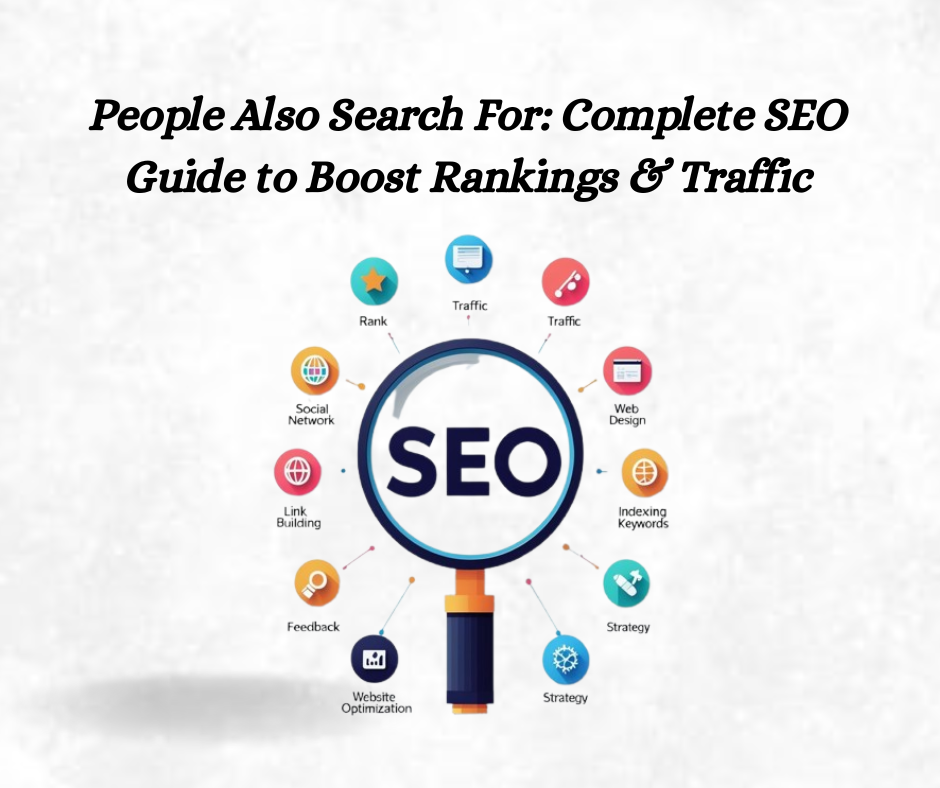
People Also Search For: Complete SEO Guide to Boost Rankings & Traffic

Introduction If you are serious about SEO, then ignoring People Also Search For (PASF) is a mistake. Most people focus only on keywords, backlinks, and content. But PASF is one of the most underrated opportunities to increase rankings, improve content depth, and capture more search traffic. This guide breaks everything down—what PASF is, how it works, why it matters, and most importantly, how to use it to grow your traffic. What is People Also Search For (PASF)? People Also Search For (PASF) is a feature shown by Google when a user clicks on a result and then returns back to the search results page. Google then shows a list of related queries that users often search for after visiting that page. Simple Explanation User searches → clicks a result → comes back → Google shows related searches. These related searches = PASF keywords. Why PASF Matters for SEO Ignoring PASF means you are ignoring real user intent. 1. Shows Real Search Behavior These are not guessed keywords. These are actual user behavior patterns. 2. Helps You Cover Content Gaps If users go back and search something else, your content likely missed something. 3. Improves Dwell Time If you cover PASF queries in your content, users stay longer. 4. Boosts Rankings Better engagement = better rankings. PASF vs Related Searches vs People Also Ask Don’t mix these up. PASF Related Searches People Also Ask (PAA) PASF is the most behavior-driven among all. How Google Generates PASF Results Google uses multiple signals: If many users follow the same pattern, Google shows those queries. How to Find PASF Keywords 1. Manual Method Search your keyword → click result → go back → check PASF. Simple but slow. 2. Use SEO Tools These tools help you find related queries faster. 3. Google Autocomplete Start typing and note suggestions. 4. Competitor Analysis Check what topics competitors are covering. Best Strategy to Use PASF in Content Here’s where most people mess up—they collect keywords but don’t use them properly. Step 1: Cluster PASF Keywords Group similar queries together. Example: These go under one section. Step 2: Add Them as Subheadings Use H2 and H3 tags. Step 3: Answer Clearly No fluff. Direct answers. Step 4: Optimize for Intent Informational vs transactional vs navigational. Content Structure That Works Follow this structure: Simple. Clean. Effective. On-Page SEO Optimization for PASF Use Keywords Naturally Avoid stuffing. Add Internal Links Link to related blogs. Improve Readability Use FAQs Section Answer PASF queries directly. Common Mistakes to Avoid 1. Keyword Stuffing Kills readability. 2. Ignoring Search Intent Leads to high bounce rate. 3. Poor Content Structure Confuses users. 4. No Updates SEO is not one-time work. Advanced PASF Strategy Build Topic Authority Don’t just write one blog. Create multiple related articles. Use Internal Linking Connect all related pages. Track Performance Use Google Search Console. FAQs What is PASF in SEO? It is a Google feature showing related searches based on user behavior. How to use PASF keywords? Add them as subtopics in your content. Does PASF improve ranking? Yes, indirectly through better engagement. Conclusion PASF is not optional anymore. If you want better rankings, higher engagement, and more traffic, you must use PASF. Stop writing shallow content. Start creating complete content that answers everything users are searching for. That’s how you win SEO in 2026.

People Also Search For: Complete SEO Guide to Boost Rankings & Traffic Read More »

search google or type a url which gives better results

Search Google or Type a URL: Which Gives Better Results?

Every internet user has seen that familiar browser prompt that quietly asks a question without using words. The bar at the top of the screen invites an action. Should the user search Google to discover something new, or should they go straight to a website by typing its address? This small daily decision shapes how people explore information, how businesses gain visibility, and how trust is built online. In a rapidly growing digital economy like India, where millions of users are transitioning from first-time browsing to regular online engagement, understanding this behaviour is essential. For businesses trying to establish a strong digital footprint, this is not just a usability question. It is a marketing advantage. Knowing when users prefer to search Google or type a URL reveals how they think, how they decide, and how they convert from visitors into loyal customers. What Exactly Is Search Google or Type a URL? Modern browsers are designed to simplify the online journey. Instead of separate boxes for search and navigation there is now a single intelligent field known as the omnibox. This space allows users to either search using keywords or directly enter a web address. When someone chooses to Search Google they are asking the search engine to interpret their intent. The system analyses the query scans billions of pages and returns the most relevant results. This is discovery mode. The user may not know exactly where they want to go yet. Typing a URL is completely different. It signals certainty. The user already trusts a destination and wants to reach it without comparison or exploration. This difference may sound subtle yet it represents two stages of the digital relationship. One is about finding options. The other is about returning to value already experienced. In India where users often begin their digital journey through search engines this transition from searching to direct visiting is a powerful indicator of brand success. How to Effectively Search Google? Searching is not just typing random words and hoping for results. Skilled searching improves speed accuracy and relevance. Many users never realise how much better their experience could be with small adjustments. When individuals use google Search Google with clarity they receive sharper answers. Instead of vague phrases they benefit from descriptive queries. A search like digital marketing services delivers generic results. A search like affordable digital marketing agency for small businesses in India produces focused outcomes. Search engines are built to interpret natural language. Questions perform exceptionally well because they mirror how people think. Someone who types how to grow an online store faster is more likely to find actionable insights than someone entering disconnected keywords. Search also evolves through behaviour. As users continue interacting with results the algorithm adapts. It begins predicting preferences suggesting faster routes and personalising outcomes. This means effective searching becomes easier over time. For businesses this highlights why content must match real user intent. If people are searching with clear problems the website must offer clear solutions. How to Properly Type a URL? Typing a URL may seem straightforward yet many users unknowingly slow themselves down by treating it like a search. When someone already knows the destination typing the exact domain saves time and eliminates unnecessary steps. Direct navigation works best when users have confidence in the website. This confidence is not created instantly. It is earned through visibility credibility and consistent experience. Returning visitors who type a website address are demonstrating trust. They are no longer comparing alternatives. They are choosing efficiency. This behaviour is especially valuable for Indian businesses trying to build repeat engagement. When users skip searching and go straight to a platform it shows that the brand has moved from discovery into habit. A well-structured domain name fast-loading pages and mobile-friendly design encourage this transition. When access feels effortless users naturally return without relying on search engines again. Search Google vs. Type a URL: A Detailed Comparison The debate between searching and typing is not about which is superior. It is about understanding when each method serves the user better. Searching thrives in moments of curiosity. It supports research comparison learning and exploration. It introduces users to brands they may never have encountered otherwise.Typing a URL excels in moments of certainty. It removes friction and delivers immediate access. It reflects familiarity and confidence. In the Indian digital landscape both behaviours are deeply connected. A new internet user often begins with search-driven discovery. Over time repeated positive experiences lead to direct visits. Businesses that optimise only for search miss opportunities to build loyalty. Businesses that focus only on branding miss new audience discovery. Sustainable growth comes from balancing both. How AI and Predictive Search Are Changing the Experience Artificial intelligence has transformed how browsers interpret user behaviour. The line between searching and typing is becoming increasingly blurred. Predictive technology now anticipates what users want before they finish entering a query. Suggestions appear instantly based on past activity popular trends and contextual signals. Voice search adoption across India has accelerated this shift. Instead of typing users speak conversational requests. The system translates natural language into actionable results. This has made Search Google or Type a URL feel less like a choice and more like a seamless flow. AI also learns navigation habits. Frequently visited websites appear automatically reducing the need for manual entry. Over time the browser becomes a personalised assistant guiding users toward both discovery and familiarity. For businesses this means visibility strategies must align with intelligent search patterns. Content must answer questions clearly while website experience must encourage repeat interaction. Troubleshooting and Customizing Your Search Bar Many users accept their browser setup without realising it can be tailored for better efficiency. A few small adjustments dramatically improve how they interact with search and navigation. Customising default search settings ensures faster responses. Saving frequently visited websites creates shortcuts for daily use. Clearing unnecessary data improves performance especially on mobile devices, which dominate Indian browsing habits. Users who personalise their search environment reduce friction in their

Search Google or Type a URL: Which Gives Better Results? Read More »